
Practical purchasing guidance based on FUPARTS component information and referenced technical material. Confirm the selected part against your machine documentation. Examples are illustrative, not customer case studies.
Plastic extrusion machine spare parts include mechanical, electrical, heating, feeding and maintenance components that keep a production line operating. The correct replacement must match the machine's interfaces and operating requirements, not simply look like the removed part. Start with the machine identity, component nameplate, drawings and application before comparing quotations.
A maintenance buyer may begin with a damaged heater or a worn screw, yet the purchase often depends on several connected components. A heater requires the correct control arrangement. A screw must work with the installed barrel and drive connection. A motor replacement needs more information than its power rating. Understanding these relationships helps you organize a useful request instead of collecting unrelated prices.
This guide maps the main parts used on EPE foam, stretch film and other plastic extrusion lines. It also explains what to record, which details need technical confirmation, and how to prepare for supply and installation. The examples are purchasing scenarios, not claims about completed customer projects or guaranteed operating results.
What spare parts does a plastic extrusion line need?
A practical spare-parts list follows the production line from material feeding to finished-product handling. It includes the extrusion assembly, drive train, heating and controls, melt connections, cooling equipment and downstream wear parts. Actual requirements vary with the machine configuration, processed resin and equipment documentation.
| System | Typical components | Information to collect |
|---|---|---|
| Extrusion | Screw, barrel, screen-changer components | Geometry, connections, material, drawings |
| Feeding and dosing | Feeders, GMS pumps, butane pumps | Medium, rated conditions, interfaces |
| Die and forming | Die head, mandrel, flange | Flow passage, alignment, mating dimensions |
| Heating and controls | Band heaters, thermocouples, controllers | Dimensions, voltage, power, sensor type |
| Transmission | Motor, gearbox, coupling | Nameplates, speed, torque, mounting |
| Cooling and converting | Blower, roller, air shaft, blade | Function, dimensions, connections |
| Maintenance | Seals, chains and other wear components | Exact type, material, working conditions |
Treat this table as a collection framework rather than a universal bill of materials. A line may have multiple extruders or several apparently identical temperature zones. Give each machine and component position a unique identifier so the right part reaches the right maintenance job.
Screws and barrels: match the working pair
What should buyers confirm for a replacement screw?
Record the nominal diameter, working length, overall length, drive connection and relevant geometry. Include the resin, additives, processing application and existing drawing revision. If a drawing is unavailable, photographs can help identify features, but they do not establish tolerances or internal dimensions.
Length-to-diameter ratio, usually written L/D, describes a geometric relationship. It is not a complete performance specification. Two screws with the same diameter and L/D can have different channel geometry, mixing features and end connections. Ask what length the quoted ratio uses, and compare the full drawing rather than assuming two ratio labels describe interchangeable components.
FUPARTS lists 55:1 as a configurable reference for applicable EPE screw configurations. It should not be treated as the best ratio for every polymer or extrusion line. Use the single extruder screw page to discuss a specific machine requirement, not as a substitute for engineering confirmation.
Why should the barrel be checked at the same time?
The screw and barrel function together. A replacement decision should consider the condition and geometry of both, including relevant bores, ports and connections. Purchasing a new screw without reviewing the existing barrel can leave an important source of mismatch unresolved.
A useful purchasing file separates original design dimensions from measurements taken after service. Mark whether a recorded diameter comes from an approved drawing, an unused spare or a worn component. This distinction helps prevent wear from becoming the specification for the next part.
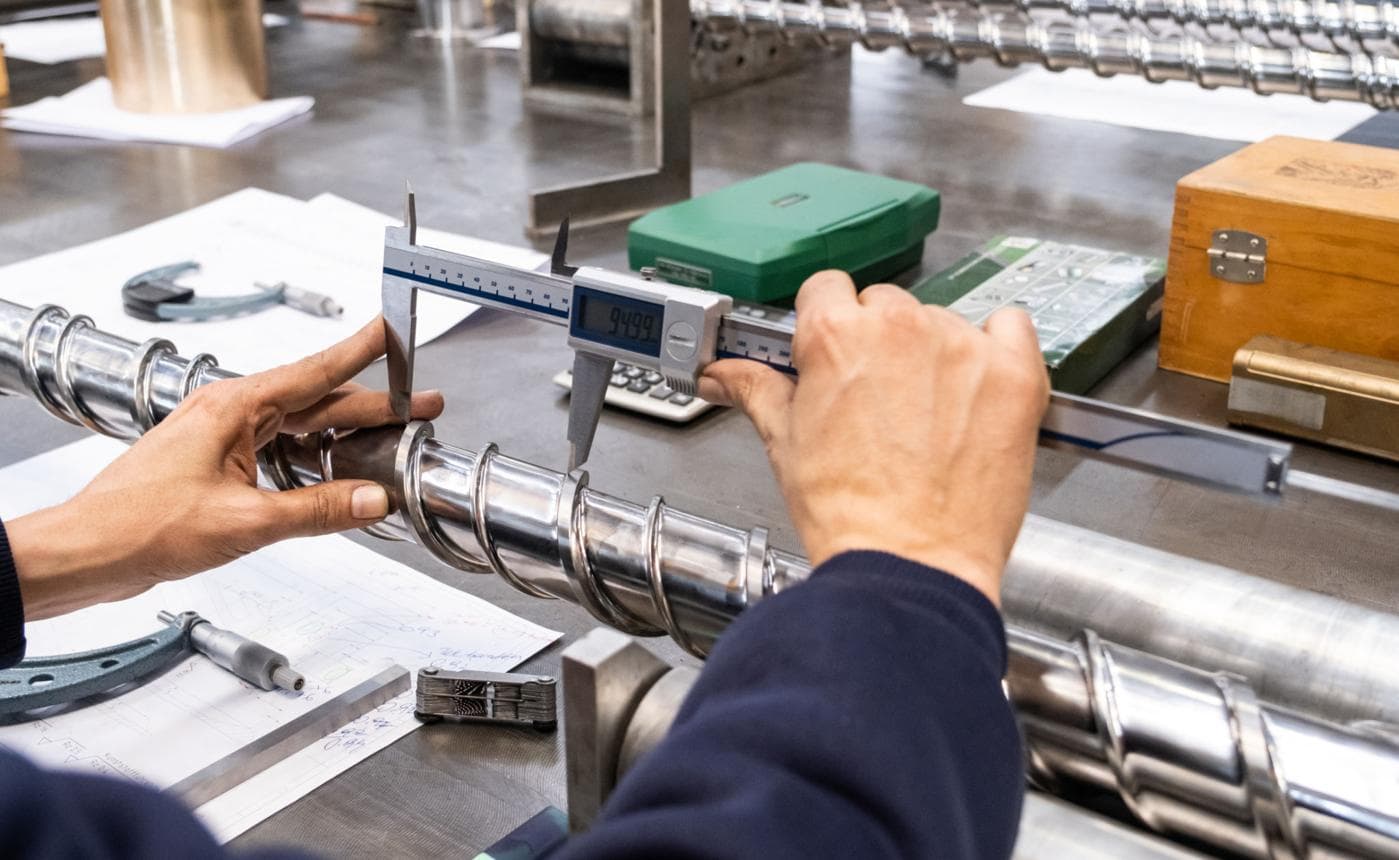
Supplied image showing an extrusion screw dimensional check; it is not a certified inspection report for an order.
Motors, gearboxes and couplings: review the complete drive
A motor is more than its kW value
A motor request should include the exact model, voltage, frequency, rated speed, current, mounting arrangement and shaft dimensions. Photograph the nameplate clearly. Also identify the inverter or other control equipment, because the chosen motor and control arrangement must be reviewed together.
Do not infer efficiency class, enclosure protection or insulation rating from the color or appearance of a motor. Likewise, a motor with the correct power can still have a different shaft, frame or operating requirement. The industrial electric motor page explains the information FUPARTS uses for matching.
Gearbox numbers need an explanation
Gearbox size references, reduction ratios and torque ratings are different kinds of information. A number cast into a housing or listed against a machine model may not identify all three. Obtain the nameplate and relevant drawing before treating a supplier's model designation as equivalent to the removed unit.
For an extruder gearbox, record input and output requirements, mounting dimensions, shaft or hollow-bore details, keyways and connections. Ask which configuration the quotation covers. If the existing drive has been modified, provide the current arrangement rather than only the machine's original sales specification.
Couplings add another interface to the same chain. Bore size, shaft fit, keyway, spacing and the intended coupling type need review. Buying a motor and gearbox separately does not automatically confirm the coupling or the alignment between them.
Heating and temperature-control parts: identify the whole zone
A heater request should state its inside diameter, width, voltage, rated power, connection arrangement and installation location. Photographs should show the terminals, fastening method, cable route and nearby obstructions. Confirm the required heater construction against the machine design and operating environment.
A matching temperature zone also depends on the sensor, controller and switching arrangement. Thermocouple type, probe dimensions, mounting thread, cable specification and connection polarity can matter. A controller's model, supply and input/output configuration should be recorded separately from the temperature setpoint shown on its display.
It is useful to create a zone list before purchasing several replacements. Label the zones consistently, then attach the heater and sensor information for each position. Similar-looking bands may have different ratings, and a controller fitted during an earlier repair may differ from the one listed in the original machine manual.
Have qualified personnel verify electrical compatibility and installation. This article is a procurement guide, not an instruction to work on energized equipment or alter a machine's protection and control systems.
Feeding, pumps and valves: the process medium matters
A feed pump or valve should be identified by its function as well as its physical connection. Record what flows through it, relevant rated conditions, control method, interfaces and materials where known. The same port diameter does not establish compatibility with a different fluid or duty.
EPE lines may include GMS dosing, talc feeding or other process-specific equipment. Some configurations involve flammable blowing agents. Components for those services require assessment against the original equipment requirements and applicable safety rules by qualified specialists. A generic pump or valve photograph is insufficient for selection.
For routine inquiries, a process sketch can be more useful than a long list of isolated photographs. Identify the component position and show what connects upstream and downstream. Keep unknown values clearly marked so the supplier can request the missing information instead of assuming it.
Dies, flanges and connecting components
Dies, mandrels, flanges and transition components define interfaces and flow paths. A request should capture mating faces, bolt arrangements, bore or passage geometry, overall dimensions and installation orientation. Record the machine position and identify the parts that must connect to the replacement.
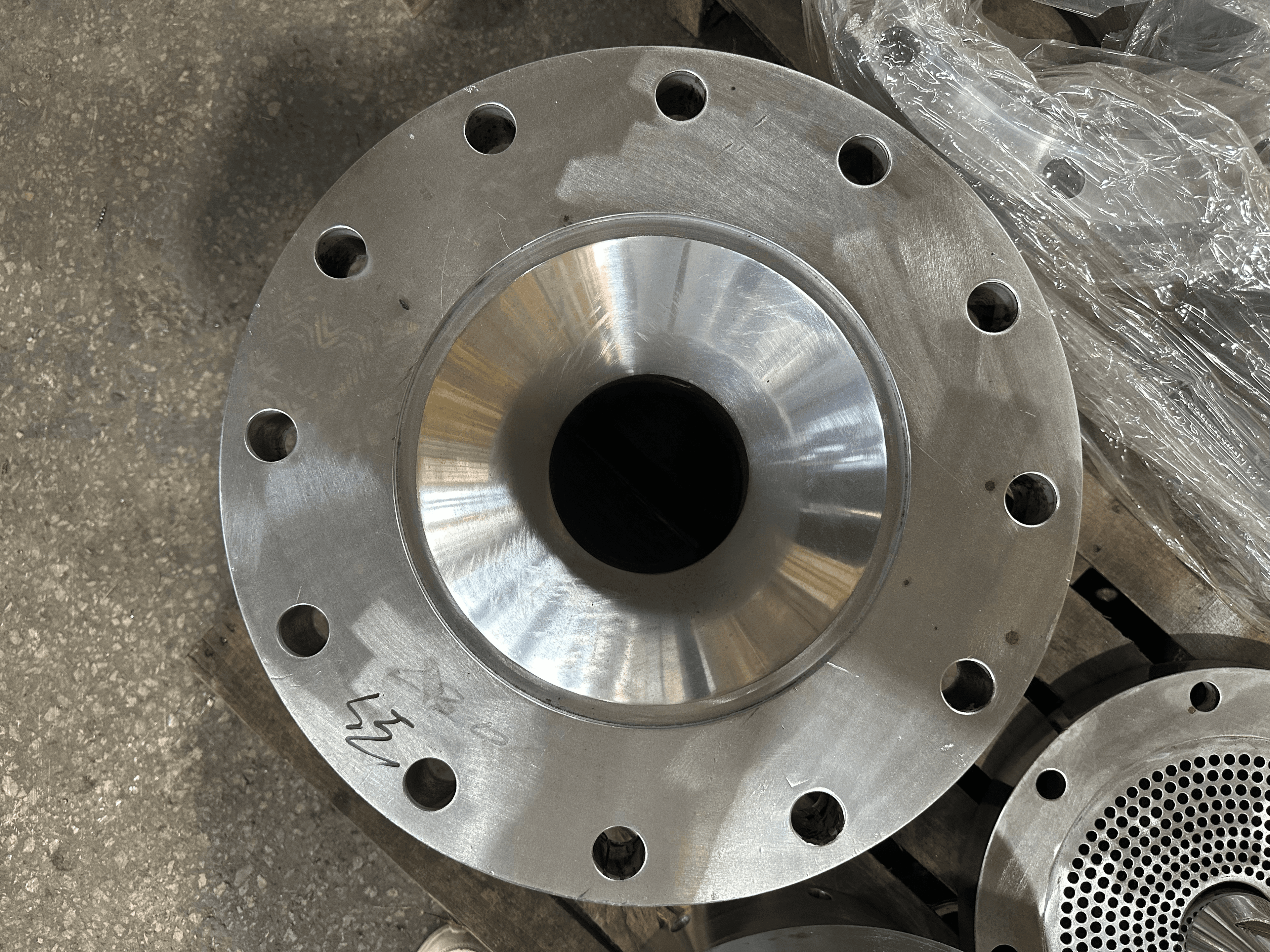
Supplied flange image illustrating connection features that buyers should identify before ordering.
A photograph with a ruler can explain scale, but it is not a dimensioned manufacturing drawing. For custom components, agree which drawing controls production and which features require verification. State material and surface requirements only where confirmed, rather than accepting an unspecified description such as “standard alloy.”
If the order includes several mating components, request a consistency review across the complete assembly. This can reveal a mismatch between separately quoted bolt patterns or connections before parts are produced or dispatched.
Cooling, winding and other frequently replaced parts
Downstream equipment deserves a place in the spare-parts plan. Rollers, air shafts, blades, bearings, pneumatic cylinders and drive chains may have shorter purchasing discussions than a screw, but incorrect interfaces can still prevent installation.
For a roller, start with the function, face length, diameter, shaft arrangement and surface requirement. For an air shaft, identify the working length, connection and operating specification. For a blade, record dimensions, hole pattern, edge arrangement and material requirement from the existing documentation.
A cylinder request should include bore and stroke where known, mounting arrangement, rod-end connection, port details and operating requirements. Do not identify it solely by overall length in one photograph. The mounting and movement requirements should be reviewed against the actual machine position.
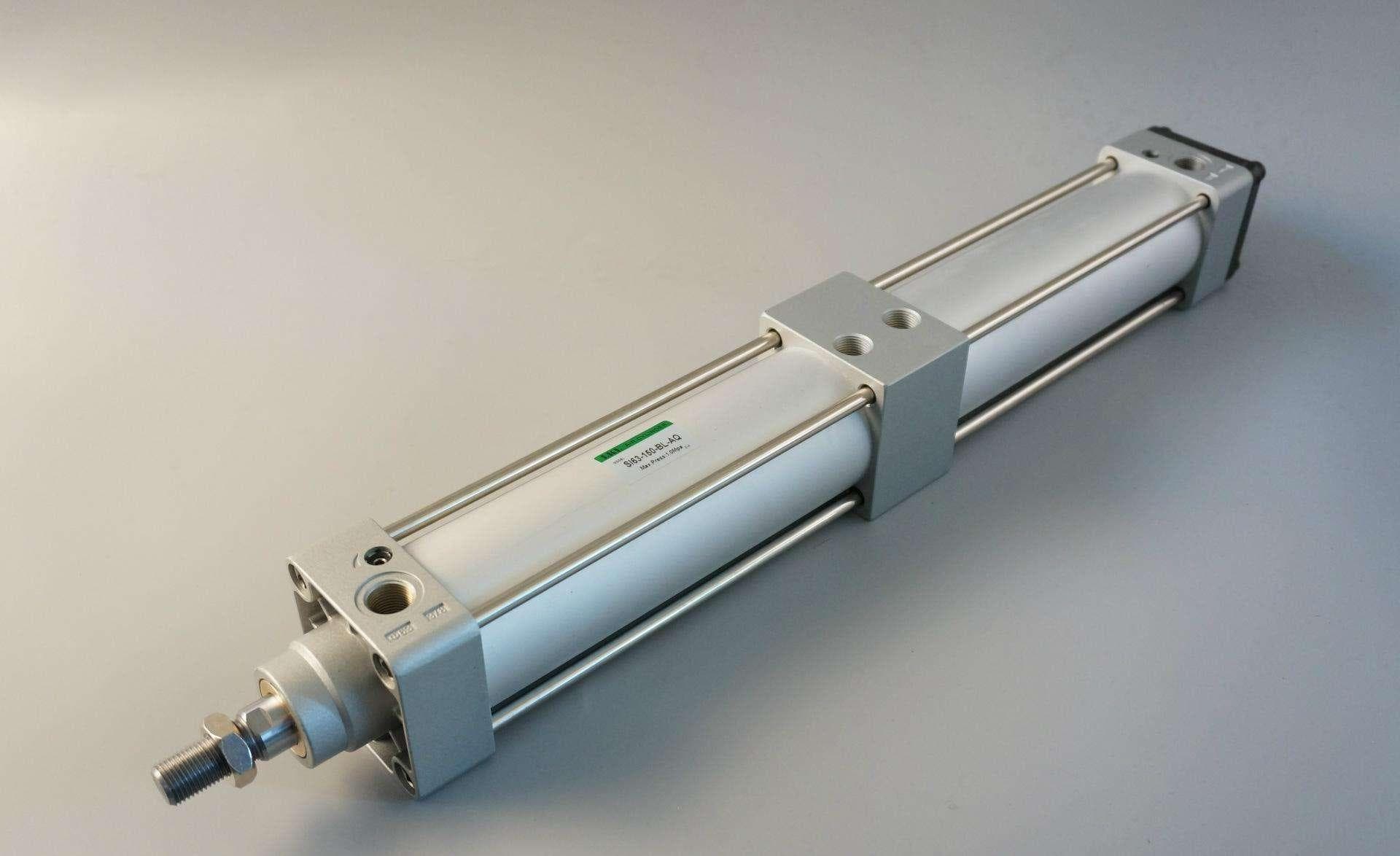
Reference pneumatic cylinder image; a specific replacement requires dimensional and operating confirmation.
Which parts should be kept as maintenance spares?
Build the stock list around consequence, lead time and confidence in identification. A low-cost component with no immediate substitute can deserve attention before an expensive assembly that rarely needs replacement. Avoid stocking an unverified part merely because a previous quotation called it compatible.
Group candidates into three practical levels: routine consumables, line-stopping replacements and engineered assemblies. Review failure history, operating duty and the time needed to source each item. Agree the stock quantity with the maintenance and purchasing teams instead of applying one rule to every plant.
Storage is part of the decision. Record preservation instructions, packaging condition and traceability information. Identify any components that need periodic condition checks or special storage arrangements. A stored spare is useful only if its identity and condition remain suitable when the line needs it.
How should a buyer compare quotations?
Compare the agreed technical scope before price. Ask each supplier to identify the exact item, drawing revision, included components and any exceptions. Review availability, lead time, inspection documents, packing and shipping responsibilities in the same comparison sheet.
A statement such as “fits 200 machine” leaves too much unresolved. Ask what the machine reference means, which interfaces were checked and what data supports the match. Where a standard part number is available, keep the complete suffix and configuration details rather than shortening the identifier.
For custom items, agree a change-control point. If a dimension or material is revised after quotation, obtain an updated technical confirmation. A clear record makes it easier to distinguish a changed customer requirement from a supply error.
Inspection, shipment and installation preparation
Plan inspection when you define the order, not after the goods are ready. State which checks are required, how results should be recorded and whether factory testing is included. Do not assume a general catalog statement means every shipment includes the same test report.
For shipment inspection, request identification photographs and the agreed dimensional or documentation checks. Match the packing list to the component identifiers used in the quotation. Heavy or long components may need particular support and protection; agree the arrangement for the actual part and shipping route.
Before installation, compare the delivered identity and accessible dimensions with the approved order. Prepare the equipment documentation, competent personnel and any required lifting, alignment or commissioning resources. If a mismatch is discovered, resolve it before modifying the component or machine to make it fit.
Turn the catalog into a usable plant parts register
A category list becomes more useful when it is tied to machine positions. Give every approved item a plant reference and record its supplier description, original model, photograph, drawing and acceptance requirements. Keep a link to the latest order so purchasing can see what was actually supplied rather than an earlier inquiry.
For example, a maintenance register might identify a heater as the second barrel zone on a named extruder. Its record would include dimensions, electrical ratings and connections, alongside the matching sensor information. A second machine may use a similar-looking heater, but the register should keep the requirements separate until compatibility is confirmed.
Use a simple status field for each record: identified, awaiting measurements, technically approved or ready for reorder. This makes missing information visible. A buyer should be able to tell whether a catalog photograph represents a verified replacement or only a component family that still needs matching.
Review the register after a modification or a successful replacement. Record the installed configuration and withdraw superseded details from active use while retaining the history. Otherwise, a future order may repeat the machine's original specification even though the working installation has changed.
The same approach supports distributor purchasing. Keep the end customer's machine reference connected to the item record, and avoid merging different customers' parts solely because their names match. A clear register helps an engineer answer technical questions and helps a purchasing colleague request the correct quotation without guessing. It also gives incoming replacement photographs a defined place in the record, rather than leaving them scattered across email and messaging conversations.
Frequently asked questions
Are plastic extrusion spare parts interchangeable between machines?
Only when the relevant mechanical, electrical, material and operating requirements match. Machine category and visual similarity do not establish interchangeability. Verify the exact component position, nameplate and drawing information before ordering.
Should I buy OEM or compatible replacement parts?
Either route requires a clear specification. OEM identification can simplify traceability, while a compatible alternative needs documented comparison of the relevant requirements. Warranty conditions, engineering approval and the consequences of a mismatch may determine the preferred route.
What if the original part number is missing?
Send the machine identity, clear photographs, available drawings, measured interfaces and application details. Mark uncertain values. Further measurement or inspection may be necessary before a supplier can confirm a suitable replacement.
Does every spare need a custom design?
No. Many parts can be selected from existing configurations. Custom manufacture is appropriate only where the requirement and technical feasibility justify it. Ask the supplier to distinguish a standard selection from a drawing-based item in the quotation.
Can I use one maintenance interval for all components?
No universal interval applies to an entire extrusion line. Follow the equipment documentation and use condition, operating hours, process history and qualified inspection to decide when components need attention.
Conclusion: organize parts around the machine
A useful extrusion spare-parts program connects component identity, operating requirements and purchasing records. Begin with the whole line, then collect the information needed for each replacement. Check connected interfaces, document unknowns and agree inspection before the order is released.
FUPARTS supports mechanical, electrical and maintenance-part sourcing for plastic processing machinery. Browse the parts-by-system catalog to identify the relevant component group, or send your requirements with the machine model, photographs, drawings and quantity. Our team can help review the information needed for a matching quotation.